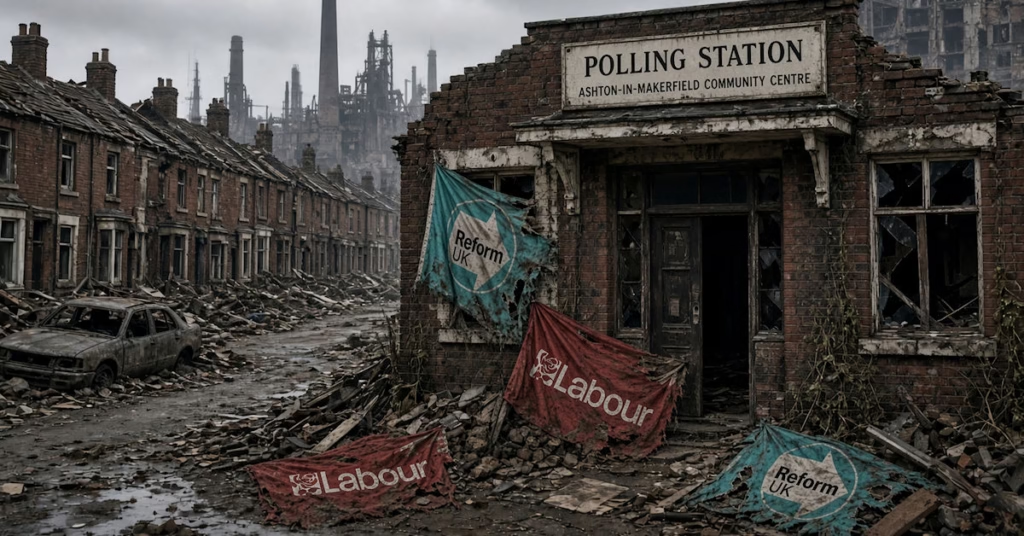
The state of UK politics, late 2026
What if we had a General Election tomorrow (or in the next six months)?
Full disclosure:
I am playing with AI and asked Grok to prepare this for me, using my style. If I agree (which I did), I’ll leave it as is, if not, I’ll annotate it.
For the most part (about 99%) I actually agree, just a few grammatical and formatting changes really. Content is solid.
Grok is a lot politer than me, never even called Burnham a grifter, let alone more choice terms for him, but he was analysing one of my ‘clean’ sites and not say my political page on Facebook where I’m a tad less politically correct and a tad more outspoken *cough*
I also asked the odds of ReformUK winning and it was a depressing “zero”, with the Tories not much better. Restore doesn’t get a mention – at all. Sorry, Rupert, you ARE splitting the vote for no reason other than your own bile and machinations. As it stands, which is both baffling and utterly depressing, Labour take back the Red Wall and keep all the seats in my town and in neighbouring Makerfield. Bollocks! The country is cooked if folk don’t wake up!
On the plus side, when I asked about the risk of civil war in the UK, Grok says no.
“Bottom line:
The UK can get messier, more polarised, and more argumentative. It can have worse elections, more protests, and sharper cultural fights. The chance of that escalating into actual civil war across the country is vanishingly small”
It’s November 2026. Labour have been in for a couple of years now. Keir Starmer is long gone, replaced by Andy Burnham after the usual round of “in the national interest” manoeuvring that had everyone rolling their eyes.
The Tories are still picking themselves up after the 2024 thrashing, Kemi Badenoch is trying to look like a proper opposition leader, and Reform UK are still banging on about immigration and the swamp while discovering that getting into the mid-20s in the polls is one thing and turning that into seats under First Past the Post is another entirely.
So, if we went to the polls sometime between now and, say, May 2027, what would we actually get?
The numbers, as they stand:
Looking at the recent polling (YouGov, More in Common, Deltapoll, Ipsos, the usual suspects), Labour are generally sitting somewhere in the high 20s to low 30s. Reform and the Conservatives are trading places in the low-to-mid 20s, with the Greens and Lib Dems picking up the rest in the high single digits or low teens.
Seat projections from the various models point to a hung parliament more often than not.
Labour as the largest party, but short of a majority.
Conservatives and Reform both picking up a decent haul of seats but neither looking like they can form a government on their own.
That’s the picture right now. It could shift, of course.
Polls are snapshots, not crystal balls, and six months is a long time in politics when the cost of living, NHS waiting lists, and whatever the latest scandal is keep dominating the news.
Still, the broad shape feels fairly sticky.
Why Labour are still ahead (for now)?
Burnham’s not exactly setting the world on fire, but he’s not actively unpopular in the way Starmer became. There’s a sense that the government is trying to look a bit more northern and practical than the last lot, even if the actual delivery is still the usual mix of announcements, delays, and “we’re reviewing it.”
The economic numbers aren’t brilliant, taxes are up, and plenty of people are still grumbling about immigration and small boats, but enough voters seem to be giving them the benefit of the doubt (or at least preferring them to the alternatives) that they’re holding a lead.
The danger for Labour is that this lead is soft. If Reform keep nipping at them on the right-flank issues, or if the Conservatives manage to look vaguely competent again, that 6–8 point cushion can evaporate quickly. First Past the Post is brutal when your vote is spread thin.
The Conservatives and Reform: still splitting the right
This is the bit that feels depressingly familiar. Badenoch has steadied the Tory ship a bit. They’re not in freefall anymore, and in some polls they’re level or even slightly ahead of Reform. But they’re still nowhere near where they need to be to seriously challenge for government. The 2024 wipeout left a big hole, and a lot of the old “blue wall” seats are still looking vulnerable or already gone.
Reform, meanwhile, are stuck in that awkward zone. High enough to matter, high enough to keep the Tories honest (or panicked), but not high enough to become the main opposition or to force a realignment. Farage is still the face of the party, for better or worse. Every time there’s a controversy involving one of their candidates or donors, the media pile on, and the poll numbers wobble. Every time the government looks soft on borders or crime, they tick up again.
It’s a pattern we’ve seen before. The “vote Reform, get Labour” line is still doing the rounds in some corners, just as it did in 2024. And just like then, the maths is more complicated than the slogan. In a lot of seats the right-wing vote is split three ways now (or more, if you count the smaller outfits). In others, Reform are genuinely competitive. Predicting exactly how that shakes out seat-by-seat is the hard part, which is why the models keep disagreeing with each other.What a snap election would probably look like.
If we somehow ended up with an election in the next six months, the most likely outcome on current numbers is a hung parliament with Labour the largest party.
Something in the region of 280–320 seats for Labour,
Conservatives in the 140–160 range,
Reform somewhere between 100 and 150 depending on how efficient their vote is,
and the Lib Dems and Greens picking up the scraps.
Northern Ireland and Scotland would do their usual thing and complicate the arithmetic further.
Could Labour sneak a majority? Possible if the right stays split and turnout is low in the places they need.
Could the Conservatives and Reform somehow combine into something coherent? Unlikely in the short term — the mutual distrust is still high, and neither leader wants to be the junior partner.
A minority Labour government propped up by the Lib Dems or Greens is the most obvious path, which would come with its own set of headaches (and concessions).
The wild card is always events.
A major economic shock, a serious security incident, another round of internal Labour rows, or Reform managing to clean up their act and run a proper national campaign could move the dial. Six months is enough time for at least one of those things to happen.
The usual caveats apply: I’m not a pollster. I’m just someone who reads the numbers and the commentary and tries not to get carried away by whatever the latest hot take on social media is claiming. The models are only as good as the data going into them, and a lot can change between now and polling day. Turnout, tactical voting, local factors, and the sheer unpredictability of people who say “none of the above” until they actually walk into the booth all matter.
Also, let’s be honest: a lot of the commentary is still driven by people who want a particular outcome more than they want to look at the evidence.
The “this is the end of the two-party system” pieces and the “Reform are finished” pieces both get written every few weeks.
Reality tends to be messier than either.
Final thought
If an election were called tomorrow, we’d most likely end up with another minority or narrow-majority government and another few years of horse-trading and “strong and stable” soundbites that mean very little. The underlying problems — housing, NHS capacity, productivity, borders, the gap between what people are promised and what gets delivered — aren’t going to be solved by whichever combination of parties scrapes into Downing Street.
But that’s politics in 2026. Same as it ever was, just with slightly different faces and a few more parties fighting over the same voters.
Drop a comment if you’ve got a different read on the numbers.
I’m always happy to be told I’ve got it wrong (politely, ideally).
~ Paul (and Grok!)
Grok!
Right then. Here’s a roughly 1,200-word post written in the informal, first-person, slightly grumpy-but-conversational style of ackadia.com (Paul’s site). I’ve matched the asides, the wry digs at politicians, the poll references with a dose of “but let’s be realistic,” and the general tone of someone who’s been around the block, reads the numbers, and isn’t buying the spin.
Fair, thank you. Grok.

